Categories
Uncategorized

Seasonal Surges: How to Scale Your Workforce Appropriately

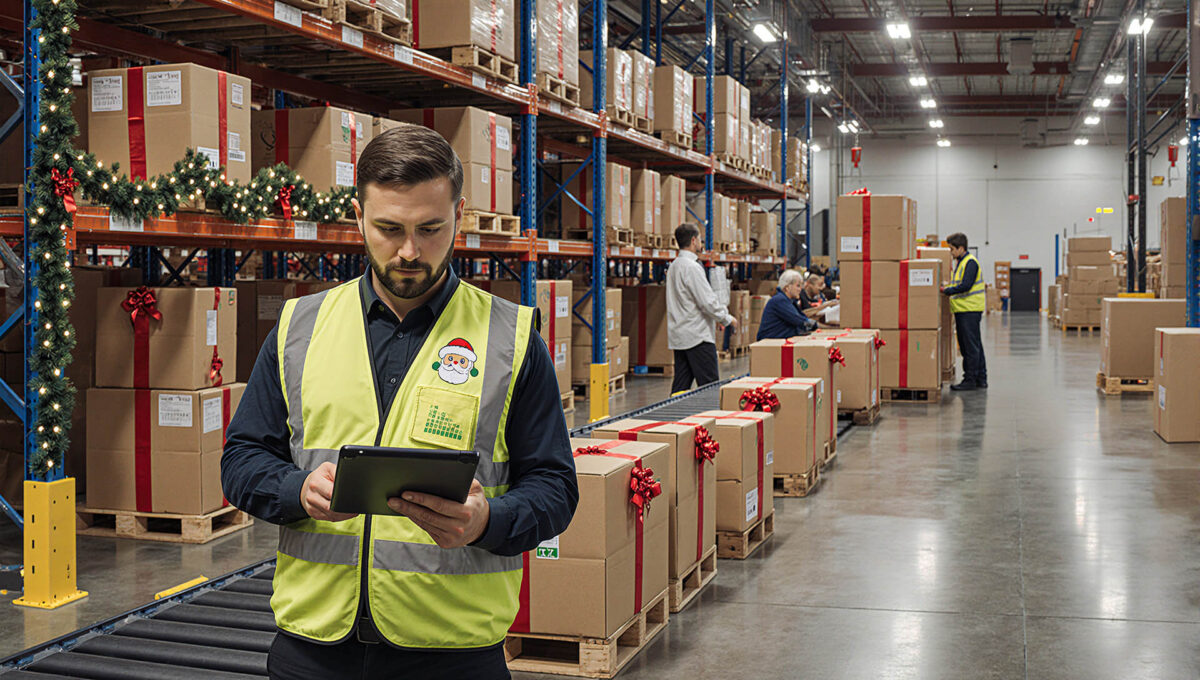
In Wisconsin, business moves with the seasons. Production lines speed up before the holidays. Distribution centers push out record shipments as retail demand climbs. Food processors take on more volume as cold-weather products become essential. These seasonal surges are expected, but that doesn’t make them easy. The deadlines are tight, the pressure is real, and customers are depending on you to deliver every time.

The companies that perform best during these spikes are not reacting in the moment. They have started preparing before the rush begins. They are aligned with with a staffing partner like us who understands their industry and already has the structure in place to scale quickly. We’ve supported Wisconsin businesses through these cycles for decades.

The lesson is simple: seasonal success is not about chance. It is about being ready. We can help with that. Let’s walk you through what you need to be prepared for seasonal fluctuations and demand.

The Seasonal Workforce Challenge

Before we share our suggested approaches, let’s pinpoint the challenge. Every peak season has a familiar pattern. Demand rises faster than the workforce can keep up. Production supervisors start wondering how they’ll maintain quality with limited staff. HR works at full speed to hire quickly without hurting standards. Transportation becomes even more challenging as shifts expand and new sites come online. Even well-prepared companies can feel stretched thin.

Seasonal hiring compresses everything into a short window. Recruiting, onboarding, training, safety orientation, scheduling, and daily shift coverage all have to happen at once. If one of these pieces slip, the impact spreads quickly. Downtime increases. Workers get tired. Mistakes occur. Leaders end up trying to fix staffing issues in the middle of their most critical production period.

A Strategic Approach to Surges

At Staffing Partners, we do not believe seasonal staffing should feel stressful. We treat seasonality as a planned part of the work cycle. On our end, that planning starts long before the busy season arrives. We talk with our clients throughout the year. We look at past busy periods. We look at signs for the next one. Then we build a workforce plan that supports the whole season, not just the start.

Recruiting happens all year. We do not wait for the rush. When our clients are ready, the workers are already prepared. We train people so they can work well on day one. This reduces slow starts and confusion. When demand grows, we do not scramble. We follow a plan that has been in motion for weeks or even months.

This approach gives employers something valuable during peak season. It gives real peace of mind. That being said, we also have workers at the ready to come through in a pinch, at a moment’s notice. So if you’re feeling behind, not to worry. Chances are we will still be able to help you out.

The Transportation Advantage

One of the biggest challenges in seasonal staffing across Wisconsin has nothing to do with finding people, which we have well covered. The real issue is distance. Many of the state’s key facilities, like food plants, warehouses, and large manufacturing sites, are located far from public transit. If someone doesn’t have dependable transportation, they simply can’t get to work. That problem becomes even bigger when staffing needs surge during peak seasons.

Years ago, Staffing Partners decided to remove that barrier for good. We invested in our own transportation network so we could bring workers directly to the job site each day. This service has become a crucial part of our seasonal staffing approach. It improves attendance, keeps shifts fully covered, and reduces the daily stress that comes from worrying about how to get to work.

When teams show up on time, production doesn’t stall. Supervisors can focus on leading instead of scrambling to fill gaps. And workers who know they have a reliable ride start their day confident, steady, and ready to work.

Support on the Floor, Not Just on Paper

Seasonal rush brings pressure. The pace gets faster. Expectations rise. New workers can feel confused or stressed. If no one steps in, people start to quit. When workers abandon their shifts during the busy season, everything suffers.

We do not just send workers and walk away. We show up. Our on-site support teams work on the floor right beside your crew. We talk with new hires. We explain what needs to be done. We make sure every shift has the coverage it needs. We watch how people are doing and we solve problems early.

This gives supervisors more time to focus on production. It also makes workers feel guided and valued. When the people doing the work feel supported, the whole operation runs better.

It’s not about micromanaging. It’s about making the busy seasons manageable again.

Industries Built for the Surge

In Wisconsin, seasonality isn’t a surprise. It shapes entire industries. Food producers hit their highest volumes from late summer into winter. Distribution centers see demand spike from October through the holidays. Many manufacturers ramp up for year-end contracts or new product launches. Agricultural packaging and cold storage move in step with the harvest and need to scale almost overnight.

The companies that succeed in these environments don’t treat seasonal surges as interruptions. They treat them as moments to gain ground and outperform the competition. The difference comes down to having the right staffing partner who can scale with them when it matters most.

Planning Today for Growth Tomorrow

The real difference between employers who soar during seasonal shifts and those who struggle comes down to when they begin planning for workforce changes. Companies that reach out during the surge often find that the entire market is suddenly competing for the exact same workers. But companies who align early with Staffing Partners benefit from dedicated pipeline development, saved seats in transportation routes, and a smooth start before the pressure fully hits.

Getting ahead isn’t just smart, it’s empowering. It allows leaders to approach peak demand from a position of strength.

Let’s Build Your Seasonal Strategy Together

Seasonal success does not come from luck. It comes from planning ahead. It comes from clear communication. It comes from having a staffing partner who is there when you need support. We are here in every season, even on short notice. We will help you stay prepared. We will help your team stay strong. We will support your growth and your goals. With the right plan, your business will keep moving forward. Between your leadership and our extra workforce, your company will be a shining example that keeps Wisconsin working all year round.

Categories
Blog

Wisconsin’s Business Pioneers: The Job Creators Who Built Milwaukee and Beyond

Wisconsin has a long history of hardworking people. Every day, our workforce is driven by tradespeople like welders, machinists, line operators, and truck drivers. There are endless unsung heroes who rise early, put themselves to the test, and do whatever needs to be done. And behind every job, there is a tireless business leader who thinks local, puts faith in the community, and takes risks in order to build something lasting. As such, Wisconsin has a growing list of business leaders that deserve our recognition and praise, and we are here to champion you.

Along with today’s business leaders like you, we also want to recognize those who came before us. Decades ago, Wisconsin’s economic strength was built by visionaries who took real risks, created jobs, supported local families, and kept communities strong during difficult times in our country. Their work shaped the foundation we all stand on today. Let’s look back at some of the business pioneers who brought jobs to Milwaukee, throughout Wisconsin, and far beyond, and who made a lasting impact.

Brewing & Food Production

Frederick Miller – Miller Brewing Company
Frederick Miller came from Germany in 1855. He started brewing beer in Milwaukee’s Miller Valley. His work built a brand that lasted for many generations. The brewery provided steady jobs for local families. It also supported Wisconsin farmers by creating a strong demand for grains.

Jacob Best Sr. & Frederick Pabst – Pabst Brewing Company
Jacob Best Sr. started brewing beer in 1844. Later, Frederick Pabst joined the company and helped it grow. Pabst Brewing became one of the biggest breweries in the country. The company offered steady jobs and real career paths. It played a major role in building the city of Milwaukee.

Joseph Schlitz – Schlitz Brewing Company
Joseph Schlitz took a small brewery and expanded it worldwide. Schlitz became known as “The Beer That Made Milwaukee Famous.” His work created jobs in production, packaging, shipping, and rail operations. This growth supported workers and families across Wisconsin.

Fred Usinger – Usinger’s Famous Sausage
Fred Usinger started his sausage company in 1880. He helped make handcrafted foods a proud part of Milwaukee’s identity. Usinger’s supported skilled work in butchering, curing, and retail. The business stayed on Old World Third Street for over a century.

Industrial Innovation

Edward P. Allis – Allis-Chalmers
Edward Allis took a small metal shop and turned it into the biggest industrial employer in Milwaukee. His factories made engines, turbines, and equipment for mills. He believed in strong teams and steady support for workers. His company helped fuel the growth of big factories and power companies across the country.

Herman Falk – The Falk Corporation
Herman Falk’s legacy began with a family brewery. After a fire destroyed it, he made a bold change. He turned to heavy machine manufacturing. His company made huge gears that helped run U.S. Navy ships during World War II. The company also kept many people working during tough times like the Great Depression. Falk showed that reinvention can save jobs and build strength for the future.

John A. Kimberly – Kimberly-Clark
Founded in Neenah, Kimberly-Clark innovated constantly, from paper products to personal care, expanding into 14 mills within 25 years. That rapid growth brought opportunity to the entire Fox Valley region.

Arthur Oliver Smith – A. O. Smith
A.O. Smith’s patented steel automobile frame transformed modern manufacturing. The company later became a key defense supplier, with facilities employing thousands across Wisconsin.

What do these business leaders have in common? They all solved major challenges and created solutions that led to long-term jobs, creating economic stability and prosperity.

Community Development

Many founders didn’t stop at business success. They also built supportive resources for the community to strengthen their workforce and to grow the region. Here are a couple of their stories.

John Michael Kohler – Kohler Co.
Kohler introduced cast-iron enamel plumbing fixtures and later planned Kohler Village with quality housing and social facilities for workers. This community model improved stability and worker satisfaction long before “employee experience” was a business buzzword.

Samuel Curtis Johnson – SC Johnson
Samuel Johnson bought a small flooring company in 1886 and grew it into one of the most recognizable names in household goods. His company culture emphasized ethics, safety, and respect, helping generations of employees thrive.

Wisconsin’s greatest companies didn’t just employ people. They investedin the wellbeing of their workers, making sure that everyone had a hand in their success.

World-Famous Brands

There are a large number of brands that are household names that started right here, with humble beginnings. Here are three of them.

Harley-Davidson
Harley-Davidson began in 1903 when William Harley and the Davidson brothers started building motorcycles in Milwaukee. Their work began in small workshops and backyards. Over time, the brand grew into a symbol of American motorcycling. The company trained skilled workers and supported many suppliers across the entire supply chain. Harley-Davidson still provides employment that keeps workers and families in Wisconsin, close to the facilities.

Bucyrus-Erie (now part of Caterpillar)
Bucyrus-Erie started during Milwaukee’s early industrial age. The company built large machines used for mining and construction. Bucyrus equipment helped dig the Panama Canal. The company made Wisconsin known around the world for heavy equipment manufacturing.

Oshkosh Corporation
Oshkosh Corporation formed in 1917. The company makes strong and reliable trucks. As Oshkosh continues to expand manufacturing jobs across Wisconsin, they also train workers and assist in their skill development.

The companies we’re highlighting shaped more than their industries. They created economic growth, supported local suppliers, and helped build strong communities throughout the state.

The Workforce: Wisconsin’s Greatest Strength

Wisconsin has gone through many changes. Factories have opened and closed. New technology has replaced old ways of working. The state has seen hard times and recovery. Through it all, the people of Wisconsin kept going. They learned new skills. They rebuilt their work and their communities. They moved forward, just like the early business leaders who helped shape the state’s economy.

Employers: Let’s Keep Wisconsin Working

For more than two decades, Staffing Partners has embodied the same values that built this state, and these are likely values we all share:

  • Hard work
  • Integrity
  • Practical problem-solving
  • Partnership over transactions

We don’t just fill positions.
We create solutions that keep your operation running.

Need 50 workers tomorrow?
Need transportation solved?
Need on-site support?
Need a long-term workforce plan?

We’ll figure it out.
We will show up.
We will treat your success like our own.

The pioneers built the foundation. Today, you are building the future.
Together, we will continue Wisconsin’s proud history of strong companies, thriving workers, and communities powered by great jobs.

Staffing Partners is proud to stand with Wisconsin’s employers and the workforce that keeps this state moving forward.

When you’re ready for workforce solutions that truly work
Let’s solve your staffing needs.

Categories
Blog

Lessons I’ve Learned Over 20+ Years of Staffing

Not all staffing companies are created equal. More often than not, the “cheapest” option is a red flag. To hit those price points, you have to wonder: which essential corners are they cutting? How are workers being treated? Do they really care about my success?

For President Brian Fricker, staffing is about doing the job right, and putting clients first. There are no shortcuts at Staffing Partners – just efficiencies and hard work. Brian’s approach is simple: listen, adapt, and use every lesson learned along the way to build an even better system. His leadership combines grit, humility, and an unwavering belief in showing up.

Here’s what Brian had to say about the principles that continue to guide him and the company.

We didn’t learn to deliver for our clients by following a straight line. I’ll give you an example. Early on, we needed to service our growing fleet of vans. My first thought? This is too big—we’d need to buy lifts, tools, build a shop from scratch. It seemed impossible. But that’s what we were prepared to do. It’s what our clients needed.

Instead, we asked around everywhere. Incredibly, one shop was already equipped to our specifications. All we had to do was move in and fine tune the process. What I thought was a monumental obstacle was actually relatively easy. Years later, that decision still saves our clients money and keeps our operation running smoothly.

That lesson stuck with me: problems that seem impossible usually have a solution hiding in plain sight.

Adapting Over Time

Similarly, some new clients think their staffing challenges will be impossible to achieve. I tell them with a smile that there’s nothing we haven’t heard before. This is true and also reassuring. We’ve solved for everything. I can say this with confidence because the systems we have are time-tested. But at one point, they were new. Time and time again, we’ve had to rise to the occasion to create solutions that didn’t exist. These weren’t always easy, but they were necessary, and essential for our clients.

“We’re better as a group than we are as individuals.”

Building the Right Team

Of course, no solution works without the right people. When it comes to staffing, we’ve met plenty of “professional interviewers”—folks who look perfect in the chair but fall flat once the job starts. We had to learn to look past surface impressions and focus on commitment, accountability, and teamwork. We’re better as a group than we are as individuals.

That’s how we built the culture we have today—one where people aren’t just working for themselves, but for each other and for our clients.

Growing With Clients

That team-first approach pays off when clients grow. Take QPI, for example. They started with about 50 workers through us. Today, we manage 500 in their facilities. That growth wasn’t just about sending more people. It meant putting staff on-site, tracking piecework in detail, and providing the data that helped them win bigger contracts with 3M.

Scaling with clients means sharing in their success and helping them solve challenges at every stage. Solving the growth blockers, and seeing them succeed—that’s what drives me. We don’t just provide workers; we create systems that help our clients grow.

Never give up, never give in.

Big or Small—We’ll Figure It Out

Our clients come in all sizes. We always watch for industry fluctuations. This enables us to help companies scale as needed. For example, we help companies in a pinch staff up essentially overnight. We also supply transportation to get workers from point A to point B without interruption. While the fixes may not always be glamorous, they work. That’s what matters.

I’ve learned over time that goals need to be ambitious but achievable. Push high enough to stretch, but realistic enough to win. And no matter how hard it gets, I tell my team the same thing I tell myself: never give up, never give in.

Not Just Clients, But Partners

At the end of the day, I don’t measure success by how many workers we’ve placed. I measure it by the relationships that last decades. The ones where I know if you call me on a rough Monday morning, I’m picking up the phone.

Staffing isn’t just about filling jobs—it’s about creating real solutions that keep your business moving forward.

Let’s Solve Your Staffing Needs

When you’re ready for staffing solutions that really work, let’s talk. Bring us your toughest challenge—or all of them. Whether it’s finding committed workers, solving transportation headaches, or making your workforce the best it can be, we’ll figure it out.

That’s a promise from me to you.

Categories
Blog

Leading Through Change: Lessons From the Front Lines of Staffing

For President Brian Fricker of Staffing Partners, leadership didn’t come overnight. It was built year after year, decision after decision, and lesson after lesson. From tentative first steps to leading a company of over 100 employees, Brian has experienced firsthand how the role of a leader changes—and how staying grounded in honesty, teamwork, and accountability makes all the difference.

Here’s how Brian’s approaches may resonate with your own leadership, in his own words.

Finding My Footing

I’ll be honest: stepping into leadership wasn’t easy. On my very first day, I had to make a pivotal business decision that would test my authority. Talk about nerve-wracking. I didn’t sleep much that night—and in those early days, I had a lot of nights like that.

We started with four people. Today, we’re over 100. Looking back, those tough early decisions forced me to grow. They taught me that leadership means making hard calls, even when you don’t feel ready. I see this with our clients too – leaders stepping up and rising through the ranks. And hard workers becoming more skilled and in-demand. It feels good to be part of that process.

“If the team sees me pitching in on the small stuff, they know I’ll stand with them on the big stuff.”

Leading by Example

Over the years, my leadership style has taken shape around one principle: never ask someone to do what you won’t do yourself. I’m usually the first one here and I don’t leave until my work is done. If something important is broken—no matter how small—I’ll fix it. If the team sees me pitching in on the small stuff, they know I’ll stand with them on the big stuff.

That’s the culture I want my team to see. When people know you’re willing to do the little things, they’ll trust you with the big things. The same goes with clients. We are always looking for ways to set them up for success, even when it flies under the radar.

“We’re better as a group than we are as individuals.”

Building Culture, Not Just a Company

One of the hardest lessons I’ve learned is that talent alone isn’t enough. Over the years, I’ve interviewed plenty of “professional interviewers”—people who can ace the conversation but don’t deliver on the job.

That forced us to shift how we hire and how we build culture. We stopped looking just for individual performance and started building around teamwork, accountability, and shared commitment. It’s proven time and time again: we’re better as a group than we are as individuals.

Today, that’s what makes the difference for our clients. When they hire through Staffing Partners, they’re not just getting workers—they’re getting people who buy into a culture of reliability and respect.

Evolving With Clients

As our own team grew, so did our clients’ expectations. What was ideal five years ago might not work today. Industries change. Workforces change. Even the way people think about their jobs has changed.

The only way forward is to adapt. We’ve added new divisions, implemented technology that actually makes onboarding smoother, and developed reporting systems that give clients real visibility into their workforce. I’ve learned that if you’re not listening and evolving, you’re falling behind.

“Staffing isn’t just filling jobs. It’s about building trust, year after year.”

Finding Ways to Say “YES”

Throughout the years, clients have requested that we handle their managerial and administrative hires, in addition to providing their labor force. We wanted to say yes right away, but we waited until we knew we could deliver at the highest level. Now we can—we added on a professional division, and it has been incredibly popular. This means that we can place both regional workforces and executive positions anywhere in the country. We have candidates lined up and ready, and we can source applicants quickly too. Problem solved.

That willingness to adapt—without hesitation—is what makes the difference between “just another staffing agency” and a true partner. We don’t know any other way.

What Matters Most

After more than 20 years in staffing, I’ve worn just about every hat there is. And here’s the biggest lesson I’ve learned: staffing isn’t about headcount, it’s about trust.

Our clients call us because they need solutions. They stay with us because they know we’ll show up, we’ll be honest, and we’ll figure it out together. That’s what I’m most proud of—not the growth in numbers, but the relationships that last.

A Different Kind of Partnership

If you’re looking for a staffing company that treats you like a faceless number, there are lots of those. But if you’re looking for a partner—someone who shows up, adapts, and rolls up their sleeves—that’s what we’re famous for.

If your current workforce needs at least one improvement, let’s talk. Not just about headcount, but about building something that lasts. We’re ready to listen.